Welcome back to the Home Services Home Show, where you learn everything you need to—and a whole lot you don’t! This time, we’re skipping the football talk and diving straight into something really important: roof restoration and a surprising issue affecting homeowners—attic condensation.
Roof Restoration: A Smarter Alternative to Replacement
One of the biggest focuses for us this year has been something we call Roof Restore. It’s more than just a simple repair—it’s about restoring a roof to extend its lifespan instead of replacing it unnecessarily.
Too often, we’ve seen roofs less than ten years old completely torn off due to leaks when a full replacement wasn’t necessary. What happens then? More shingles end up in landfills, and homeowners spend thousands of dollars they didn’t need to.
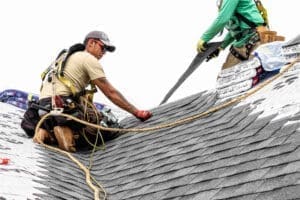
Our approach is different. Instead of defaulting to full replacements, we assess the critical details that were done incorrectly and fix them. We’re talking about reflashing chimneys, replacing pipe boots, addressing skylights, and repairing valleys—essentially everything that keeps your roof watertight.
A typical roof restoration costs around $3,000, which might sound like a lot, but compared to the $20,000+ cost of a new roof, it’s a smart investment. Plus, it prevents unnecessary waste and extends the life of your roof by 5–7 years.
Many roofers won’t have this conversation because replacing a roof is easier and more profitable for them. But at Larson & Keeney Home Services, we do what’s best for the homeowner, knowing that when the time comes for a full replacement, our customers will trust us to do it right.
The Surprising Cause of Roof Leaks: It’s Not What You Think
We recently received multiple calls for our Rapid Response Team about roof leaks. But here’s the thing—it hadn’t rained or snowed. So how could roofs be leaking?
In 99.9% of cases, what homeowners perceive as a roof leak is actually an issue with attic condensation. When warm, moist air from the house rises into the attic and meets the cold air, it condenses. That condensation freezes on metal components like nails and plates. Eventually, as temperatures rise, the frost melts and creates water damage that appears as a leak.
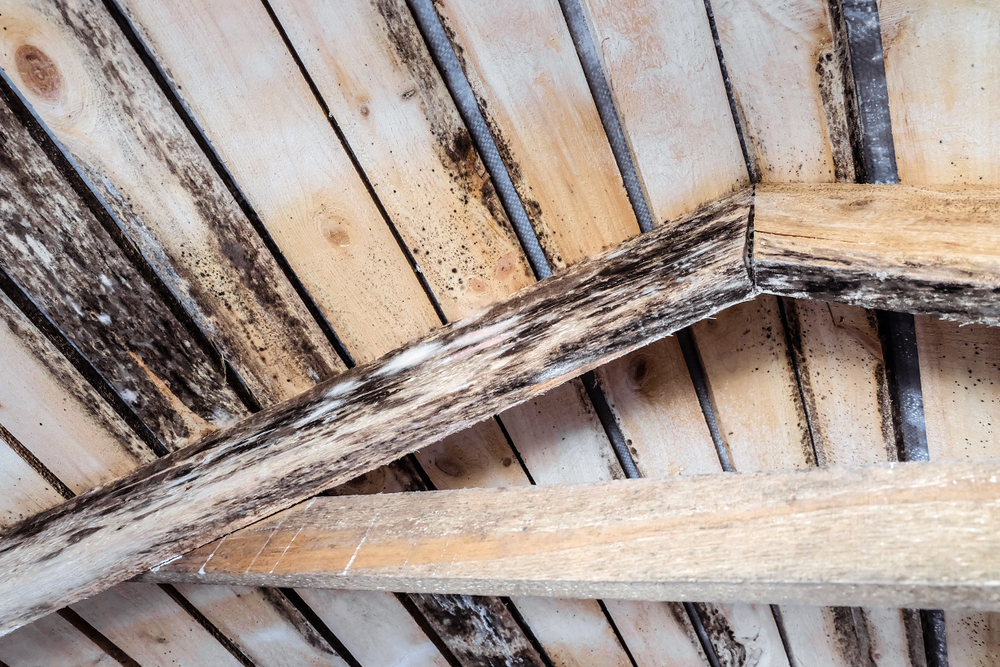
A shocking example of this happened just last week when one of our team members filmed a home where it was literally snowing inside the attic! Warm air escaping from the house was freezing and forming snow inside the attic space. This isn’t just a quirky phenomenon—it’s a serious issue that can lead to mold, insulation damage, and rotting wood.
Attic Condensation vs. Roof Leak: How to Tell the Difference
It’s Likely a Roof Leak If:
- The timing follows the weather: Stains appear or get worse immediately after a rainstorm or during a heavy snowmelt.
- The damage is localized: You see one specific wet spot or a clear trail of water dripping from a single point (like a chimney, vent pipe, or valley).
- External damage is visible: You can see missing shingles, cracked flashing, or debris buildup on the roof directly above the leak.
- It happens year-round: Roof leaks don’t care about the temperature; they occur whenever there is precipitation.
It’s Likely Attic Condensation If:
- It hasn’t rained in days: You notice “leaking” or dripping during a cold snap or a “thaw” after a period of extreme cold, even if the sky is clear.
- You see “Attic Snow”: During winter, you find frost or ice accumulation on the tips of roofing nails or the underside of the roof deck.
- The moisture is widespread: Instead of one spot, you notice damp insulation or a “speckled” pattern of water droplets across a large area of the attic.
- Bathroom fans are involved: The moisture is concentrated near where a bathroom or kitchen exhaust fan vents (especially if it vents into the attic instead of outside).
How to Prevent Attic Condensation
Homeowners often assume adding more insulation will fix the issue. But that’s not the solution. More insulation won’t stop warm air from leaking into the attic—it will just make the attic colder, worsening condensation problems.
The real solution is air sealing–specifically our Ultimate Attic Solution–which prevents warm, moist air from entering the attic in the first place. This involves:
- Properly sealing attic access points
- Ensuring vents and exhausts are working correctly
- Using bath fans to remove moisture from kitchens and bathrooms
- Installing humidity sensors on fans to ensure they run when needed
If condensation isn’t addressed, it can lead to rotting roof decking, which then requires expensive repairs or even full roof replacements.
Trust the Experts for the Right Solution
At Larson & Keeney Home Services , we don’t just look at the roof—we evaluate the entire home system, from the attic to ventilation, soffits, and gutters. This allows us to diagnose and fix problems at their source, rather than just treating symptoms.
If you think you have a roof leak, don’t jump to conclusions. It’s likely an attic issue, and replacing your roof won’t fix it. Our team takes photos, shoots videos, and educates homeowners so they understand what’s really happening and how to fix it properly.
Have questions? Keep them coming, and we’ll see you next time on The Home Services Home Show!
Need Expert Help?
If you’re experiencing attic condensation, leaks, or other roofing concerns, contact our team at Larson & Keeney Home Services. We’re here to provide honest assessments and real solutions that work for you!